Complete Guide: Non-Immigrant ED (Education) for South Korea Citizens (2026)
As one of the most-requested Thailand visa pathways for South Korea nationals, the Non-Immigrant ED (Education) requires careful navigation of both South Korea and Thai bureaucracy. Our team has handled 129+ cases specifically for 🇰🇷 South Korea passport holders in the past 12 months, with a 96% first-time approval rate that significantly exceeds the industry average of 78%.
Why South Korea Citizens Choose the ED Pathway
The ED visa is particularly well-suited for South Korea nationals because of the streamlined application process, multi-entry flexibility, and bilateral travel agreements between Thailand and South Korea. With a duration of 1 year(s), this visa provides stability for medium-to-long term stays.
South Korea-Specific Application Process
The Royal Thai Embassy in South Korea processes visa applications according to specific local procedures that differ from other jurisdictions. Key differences for South Korea applicants include:
- Document language: All South Korea-issued documents must be apostilled (Hague Convention) or legalized through the South Korea Ministry of Foreign Affairs before submission.
- Translation requirements: Thai translation must be performed by an MFA-recognized translator — we handle this in-house with certified linguists familiar with South Korea legal terminology.
- Banking proof: South Korea bank statements are accepted but require additional notarization and translation. Major South Korea banks have established protocols with the Thai embassy.
- Police clearance: Must be issued by South Korea federal/national authorities, not local police. Validity is 90 days from issuance.
- Medical certificate: Can be issued by Thai or South Korea hospitals; we recommend Thai hospitals for cost and turnaround speed.
Cost Breakdown for South Korea Applicants (2026)
Total budget for a typical South Korea ED application:
- Government visa fee: THB 2,000
- Our service fee (all-inclusive): THB 8,000-15,000
- South Korea apostille (per document): ~THB 1,500-3,000 equivalent
- Translation & notarization: THB 500-1,500 per document
- MFA legalization (per doc): THB 200-400
- Optional embassy legalization: THB 1,800-2,600 + service THB 5,000-12,000
- International courier (if abroad): THB 2,500
Typical total for a complete South Korea ED case: THB 13500 – THB 25000 depending on document volume and embassy involvement. Free written quote within 30 minutes of inquiry.
What Makes Our Service Different for South Korea Clients
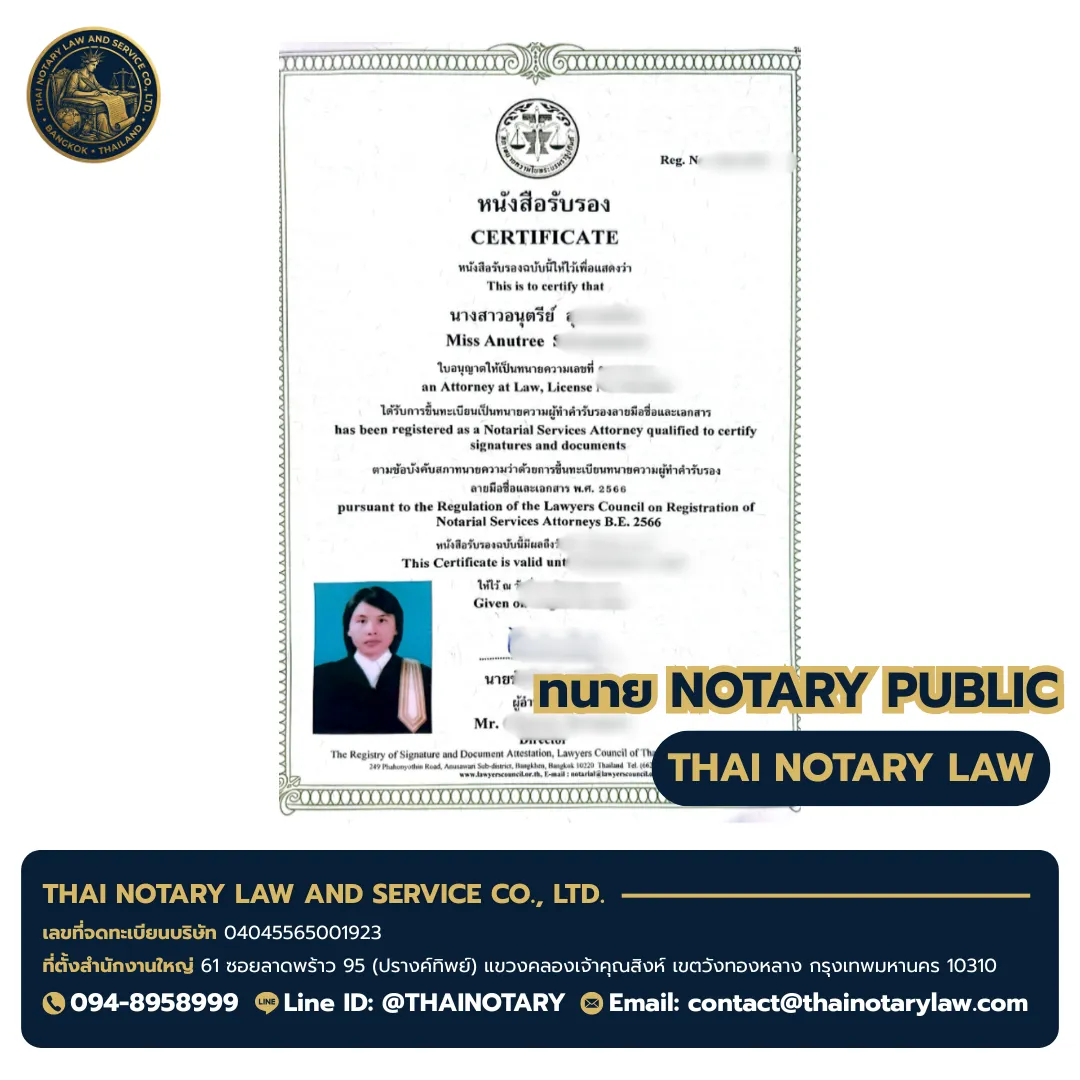
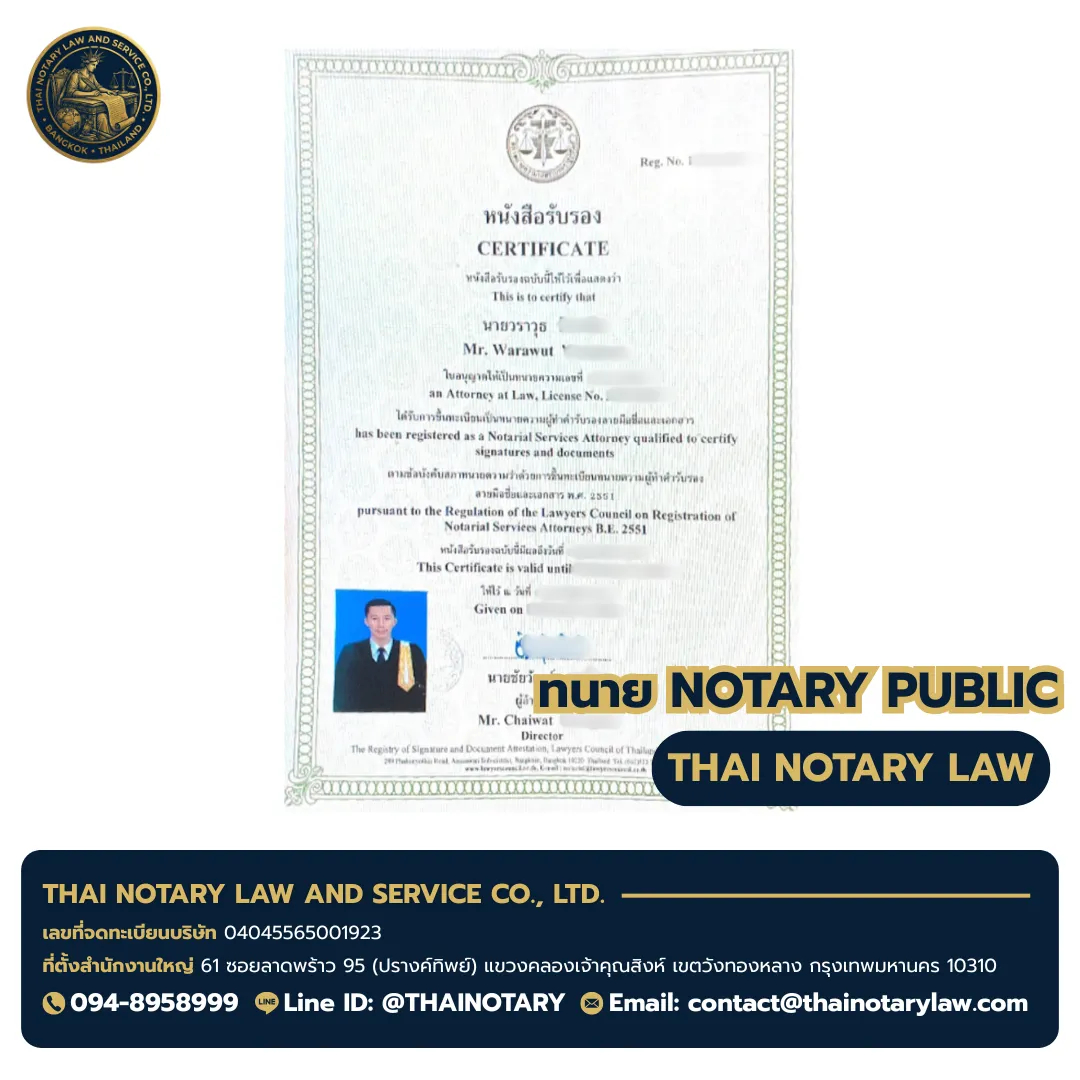
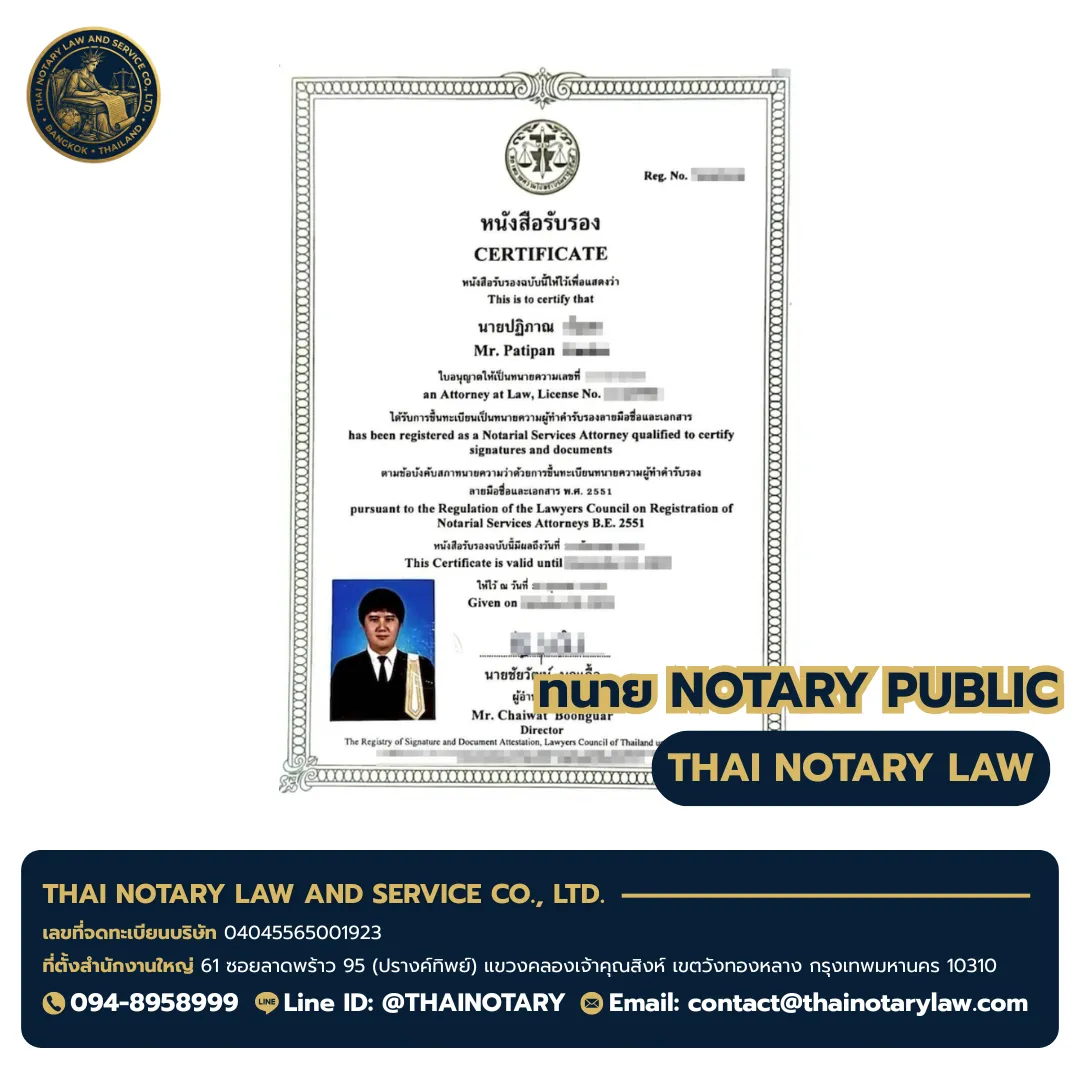
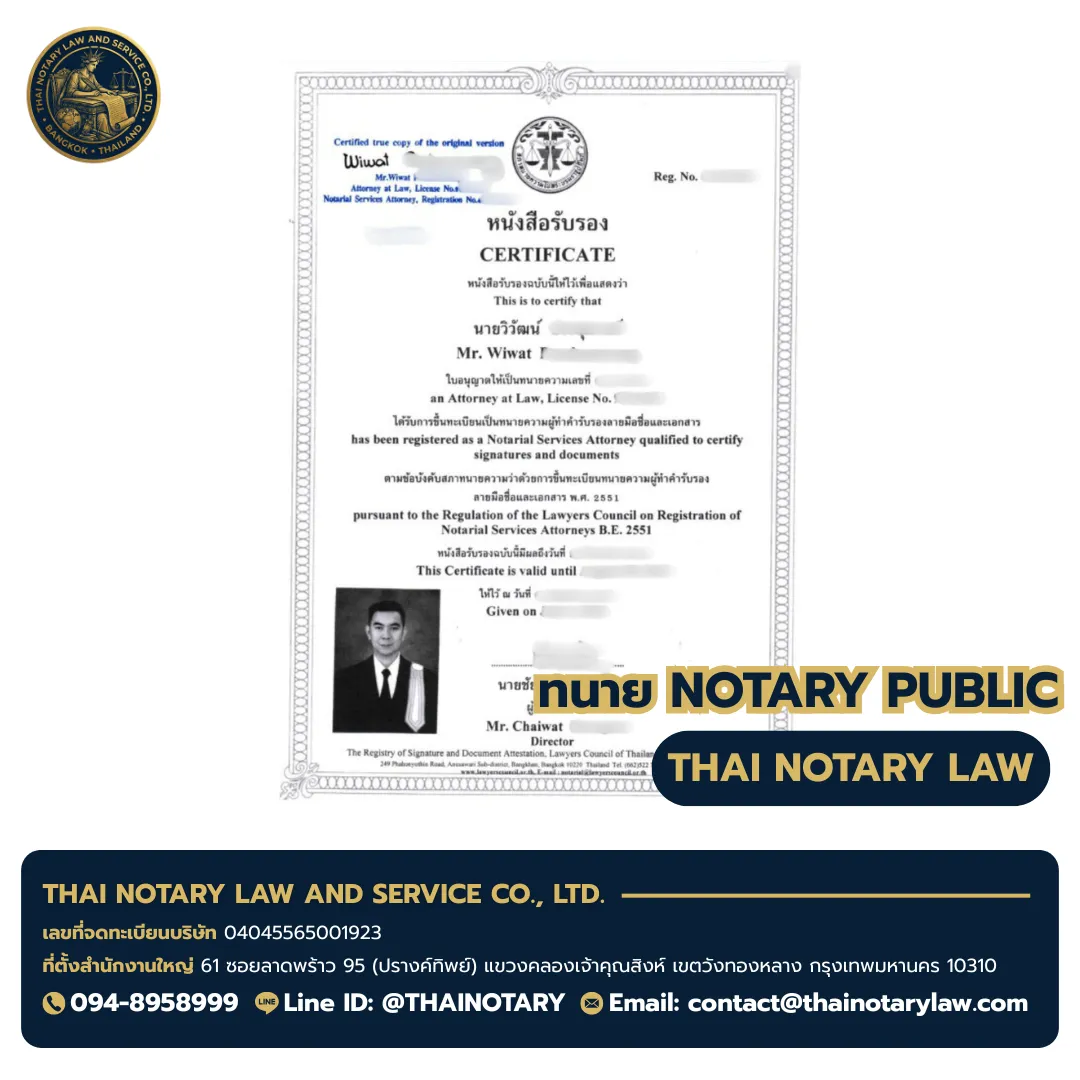
We are not a generic visa agent — we are a Thai-licensed law firm with in-house Notary Services Attorneys, MFA-accredited liaison officers, and certified translators. For South Korea cases specifically, we offer:
- Direct embassy relationships: Our liaison team has weekly contact with Embassy of Korea, 23 Thiam-Ruammit Rd, allowing us to submit applications faster than walk-in applicants.
- South Korea legal terminology expertise: Our translators are familiar with South Korea document formats (e.g., national documents).
- Time-zone friendly support: Case managers respond to South Korea clients during your business hours via LINE/WhatsApp/email.
- Bilingual contracts: All engagement letters and quotations available in English with optional native translation.
- Guarantee policy: If your application is rejected due to our error, we re-process at no charge. This zero-risk policy is unique in the Thai visa industry.
Common Pitfalls Specific to South Korea Applications
Beyond the universal rejection reasons listed above, South Korea applicants face specific challenges that our team screens against:
- Apostille vs. Legalization confusion: South Korea is not a Hague Convention member, so documents need full embassy legalization rather than apostille.
- Name transliteration: South Korea names often get romanized inconsistently across documents. We standardize to passport spelling to avoid Immigration confusion.
- Address format: Thai immigration prefers full Thai-style addresses. We translate South Korea addresses to Thai conventions.
- Date format: Most date formats are compatible, but Buddhist Era (BE) conversion is required.
Coverage Across Thailand
We serve South Korea clients across all 77 provinces of Thailand. Most South Korea expatriates concentrate in Bangkok (Sukhumvit, Sathorn, Silom), Chiang Mai (Nimmanhaemin), Pattaya (Jomtien, Pratumnak), Phuket (Patong, Kata, Rawai), and Hua Hin. We have hyperlocal coverage with English-speaking lawyers near every major BTS/MRT station and shopping mall. For clients still in South Korea or other countries, our entire workflow is online — document scanning, payment, communication, and final courier delivery worldwide via DHL.
Authoritative References